Tag: British Columbia

  • Cryptomastix mullani (Bland & J.G. Cooper, 1861)

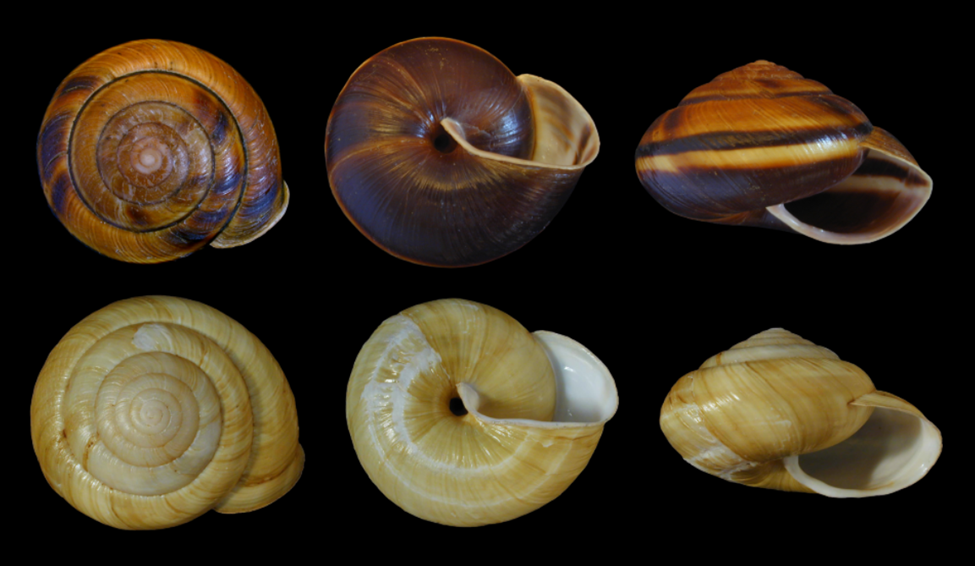
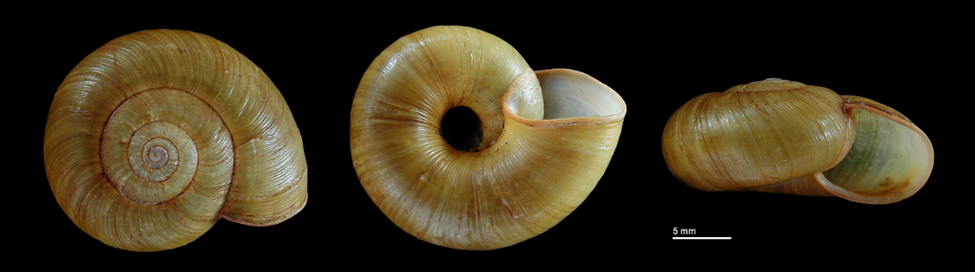
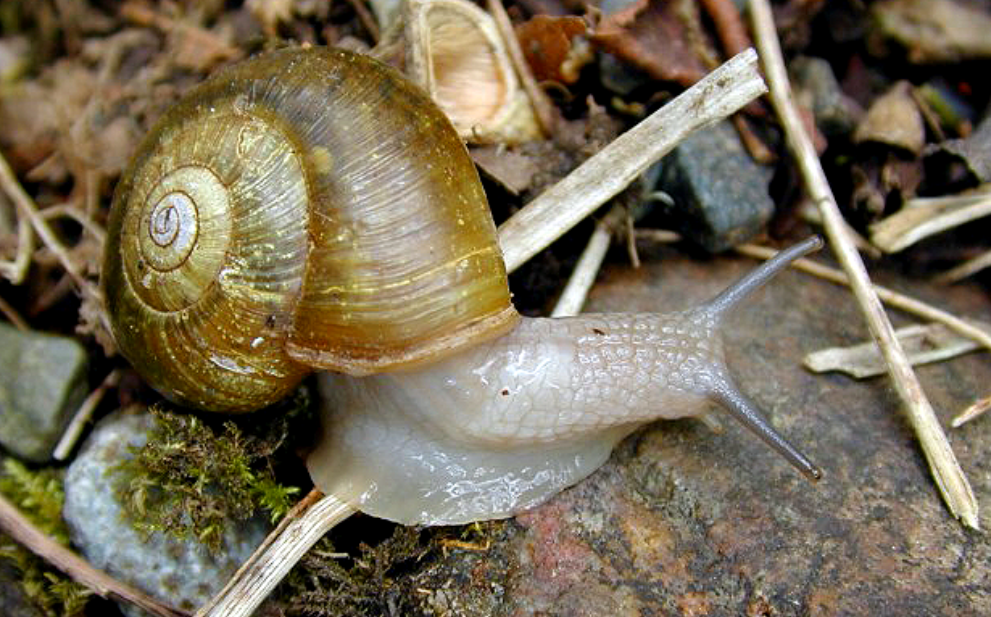
    Cryptomastix mullani, Kuskanook, E shore of Kootenay Lake, BC. Shell width 17.1 mm.
    • Helix mullani Bland & J.G. Cooper 1861: 363, 448, pl. 4 figs 16, 17.
    • Polygyra (Triodopsis) mullani var. olneyae Pilsbry 1891: 47.

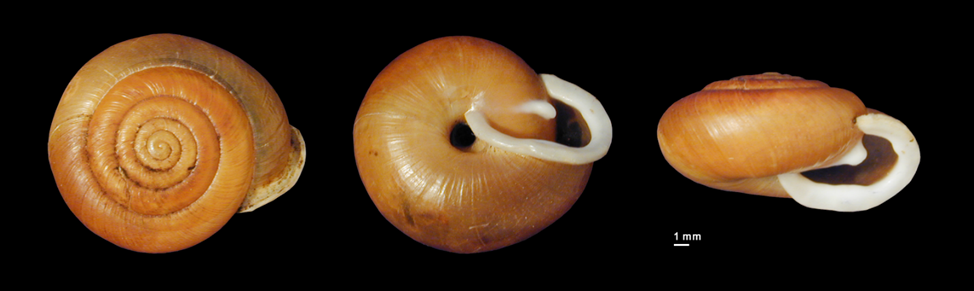
    Identification. Shell depressed. Spire low-convex, low. Periphery rounded, medial. Whorls c. 5–6, convex. Suture well impressed. Protoconch with microscopic striae coarsely broken into granules. Teleoconch with incremental wrinkles/striae and weaker spiral striae, especially on base. Periostracum always without hairs (in adults). Aperture subovate-lunate, wider than high, dentulous in adults. Parietal denticle prominent, somewhat drop-shaped, elongate, and slightly curved in basal view, rather squarish in apertural view. Umbilicus c. 1/9of shell width, partly overhung by columellar lip. Lip distinctly thickened and strongly “rolled” back. Shell opaque, shining, greyish- to yellowish-brown; lip and parietal denticle white. Shell toc. 17.1 mm wide (wider than high).

    Animal dark greyish brown.

    Comparison. This species is quite unlike the only other Cryptomastix in BC; the shell of C. devia is more globose and less flattened.

    Habitat. Moist forests; under dead wood and vegetation and in scree.

    Geographic range. In BC, north to Revelstoke and west to Vernon (Pilsbry 1940) and Chase Creek near Chase (unpublished data). The historical Vernon record at first seems suspect, but with the discovery of this species along Chase Creek and in the vicinity, Vernon cannot be ruled out. However, whether habitat still exists in Vernon for this species remains to be determined.

    Etymology. Cryptos (Greek), “hidden” + mastix (Greek), “flagellum”, in reference to the genital anatomy (with a very short flagellum). Mullani: after Captain John Mullan Jr (1830–1909), US Army, who built the road over the Bitter Root and Rocky Mountains in 1853–1854 (Pilsbry 1940; Wikipedia).

    Remarks. The genus Cryptomastix, and certainly the group that containsC. mullani and similar species, appears in need of taxonomic revision. Following the classification of Pilsbry (1940), this species has several named subspecies. Few of these taxa are well known, and generally most have been largely ignored, relegated to obscurity due to their infraspecific rank. It is likely that at least some of these taxa are valid biological species, as already found in the genus Vespericola (e.g. Roth and Miller 1993, 1995, 2000), and all purported subspecies warrant further study. Burke (2013) provided descriptions and excellent photographs of most of these, but he did not offer any taxonomic innovation.

    Specimens from Vernon, BC were classified by Pilsbry (1940) as the subspecies olneyae, which had originally proposed by him as a variety (type locality: Spokane, Washington). For now, BC records are all referred to Cryptomastix mullani s.s. For now, British Columbia populations are all referred to C. mullani (sensu lato).
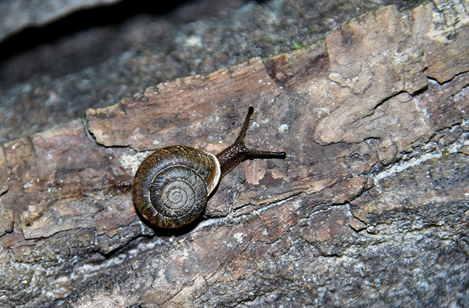
    Cryptomastix mullani, Chase Creek, BC.
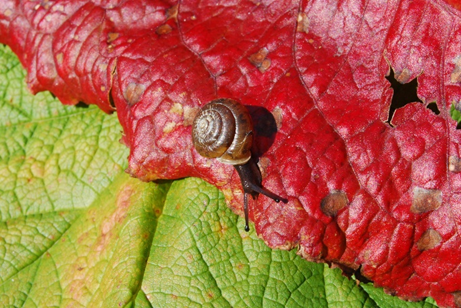
    Cryptomastix mullani, Three Valley Gap, BC.

    References

    • Bland T, Cooper JG (1861) Notice of land and fresh-water shells, collected by Dr. J.G. Cooper in the Rocky Mountains, etc., in 1860. Annals of the Lyceum of Natural History of New York 7: 362–370. https://doi.org/10.1111/j.1749-6632.1862.tb00165.x
    • Burke TE (2013) Land snails and slugs of the Pacific Northwest. Oregon State University Press, Corvallis, Oregon, USA, 344 pp.
    • Pilsbry HA (1940) Land Mollusca of North America (north of Mexico), Volume I, Part 2. The Academy of Natural Sciences of Philadelphia, Monographs 3: i-viii + 1-994 + i-ix.
    • Pilsbry HA (1891) Polygyra (Triodopsis) mullani var. olneyae. The Nautilus 5: 47. https://www.biodiversitylibrary.org/page/42788790
    • Roth B, Miller WB (1993) Polygyrid land snails, Vespericola (Gastropoda: Pulmonata), 1. Species and populations formerly referred to Vespericola columbianus (Lea) in California. The Veliger 36: 134–144. https://www.biodiversitylibrary.org/page/42465744
    • Roth B, Miller WB (1995) Polygyrid land snails, Vespericola (Gastropoda: Pulmonata), 2. Taxonomic status of Vespericola megasoma (Pilsbry) and V. karokorum Talmadge. The Veliger 38: 133–144. https://www.biodiversitylibrary.org/page/42466795
    • Roth B, Miller WB (2000) Polygyrid land snails, Vespericola (Gastropoda: Pulmonata), 3. Three new species from northern California. The Veliger 43: 64–71. https://www.biodiversitylibrary.org/page/42460712
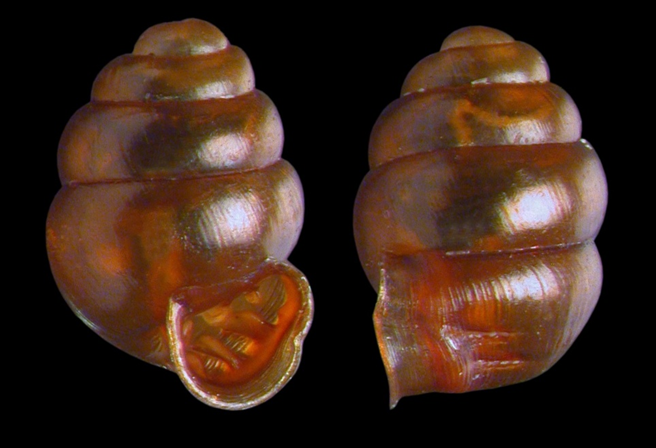
  • Vertigo ovata (Say, 1822)

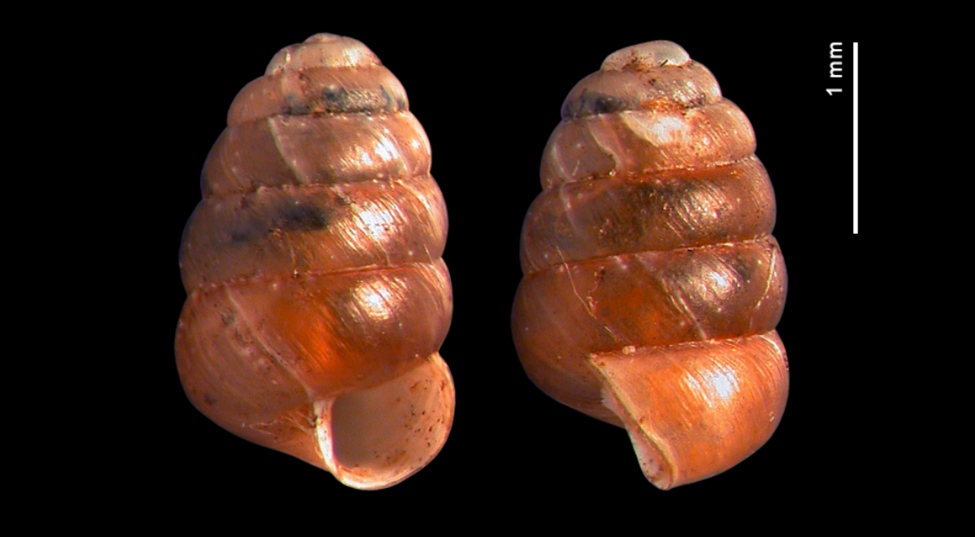
    Vertigo ovata, from shore of pond, along Hay River Hwy, Northwest Territories.
    • P[upa] ovata Say 1822: 375. TL: Philadelphia, Pennsylvania, USA.
    • Pupa (Vertigo) hydrophila Reinhardt 1877: 323, pl. 11 fig. 6. TL: Hakodate, Hokkaidō, Japan.
    • Vertigo ovata mariposa Pilsbry 1919 (1918–1920): 88, pl. 6 figs 5, 6.
    • Vertigo ovata diaboli Pilsbry 1919 (1918–1920): 88, pl. 6 figs 11, 12.
    • Vertigo (Vertigo) eogea Pilsbry 1919 in 1918–1920: 151, pl. 14 figs 1–3. TL: Akkeshi, Kushiro on Hokkaidō, Japan.
    • Plus other synonyms (see MolluscaBase)

    Identification. Shell broadly subovate. Spire subconical, sides convex. Whorls c. 4, moderately convex. Suture deep. Protoconch smooth. Teleoconch nearly smooth, with fine, weak colabral striae only. Aperture auriform. Apertural dentition: usually 9 plicae and lamellae combined but sometimes fewer; plicae: 1 angular, 1 parietal, and 1 infraparietal; lamellae: 1 columellar, 1 subcolumellar, and 2 palatal, 1 supra- and 1 infrapalatal. Outer lip thin, strongly flared outward. Palatal callus present, strong. Auricle (sinulus) deeply, sharply indented. Crest low. Umbilicus present. Shell glassy, reddish brown. Shell to 2.5 mm high (higher than wide).

    The animal is of a dark claret colour (i.e. burgundy) above, paler below (Gould 1843).

    Comparison. Typically, V. ovata has many apertural denticles, which combined with the ovate shape, and shiny surface distinguish it from most other Vertigo species in BC. It is most like V. ventricosa, which differs in having fewer denticles and, most importantly, a more strongly conical (tapered) spire.

    Habitat. This species occurs only in wetland habitats, such as along the shores of water bodies, in marshes, and in fens. It lives in leaf and grass litter, under woody debris, and on Bulrush (Typha L.) and other wetland vegetation.

    Geographic range. Vertigo ovata is known from scattered localities across BC. However, this species is associated with wetland habitats, which are very much under-surveyed for terrestrial molluscs.

    In North America, Alaska to Labrador, south to the Caribbean and Baja California (Pilsbry 1919; Nekola et al. 2018). Japan, Taiwan, and possibly mainland China (Nekola et al. 2018).

    Etymology. Vertigo (Latin), a whorl. The gender is feminine. Ovata (Latin), egg-shaped.

    Remarks. Pilsbry (1948) recognized two subspecies, V. ovata diaboli Pilsbry, 1919, described from Texas, and V. ovata mariposa Pilsbry, 1919, from California, but both taxa were synonymized with V. ovata by Roth & Sadeghian (2003). No subspecific taxa are currently recognized. However, in their molecular analysis of Vertigo, Nekola et al. (2018) found V. ovata to be polyphyletic, with three highly supported clades that contain a wide-ranging species (likely V. ovata of Say) and two additional undescribed species. These authors also found that two Asian taxa, V. hydrophila and V. eogea, are V. ovata.

    In the literature, there is inconsistent usage of parentheses around the author and date of this species. Because Say (1822) presented this species as “P. ovata” where “P.” stood for Pupa, parentheses would be required when the species name is used in combination with the genus Vertigo. The complication to this is that Say included “P. ovata” under the heading “Genus Vertigo …” and “P.” seems to be an error for “V.

    References

    • Gould AA (1843) Monograph of the species of Pupa found in the United Sates, with figures. Boston Journal of Natural History 4: 350–360, pl. 16.
    • Pilsbry HA (1918–1920) Pupillidæ (Gastrocoptinæ, Vertiginæ). Manual of Conchology, Structural and Systematic with Illustrations of the Species Second Series: Pulmonata 25: 1–64, pls 1–5 [1918]; 65–244, pls 6–18 [1919]; 225–401, i–ix, pls 19–34 [1920].
    • Pilsbry HA (1948) Land Mollusca of North America (north of Mexico), vol. II, part 2. The Academy of Natural Sciences of Philadelphia, Monographs 3: i–xlvii + 521–1113.
    • Reinhardt O (1877) Diagnosen japanischer Landschnecken. Jahrbücher der Deutschen Malakozoologischen Gesellschaft 4: 320–325.
    • Reinhardt O (1877) Über japanische Hyalinen, unter Zugrundelegung der Sammlungen des Herrn Hilgendorf. Sitzungs-Berichte der Gesellschaft Naturforschender Freunde zu Berlin 1877: 89–97. https://www.biodiversitylibrary.org/page/8796809
    • Roth B, Sadeghian PS (2003) Checklist of the land snails and slugs of California. Santa Barbara Museum of Natural History Contributions in Science 3: 1–81.
    • Say T (1822) Description of univalve terrestrial and fluviatile shells of the United States. Journal of the Academy of Natural Sciences of Philadelphia 2: 370–381. http://biodiversitylibrary.org/page/36831560
    • Nekola JC, Chiba S, Coles BF, Drost CA, von Proschwitz T, Horsák M (2018) A phylogenetic overview of the genus Vertigo O. F. Müller, 1773 (Gastropoda: Pulmonata: Pupillidae: Vertigininae). Malacologia 61: 21–161. https://doi.org/10.4002/040.062.0104
  • Radiodomus abietum (H.B. Baker, 1930)

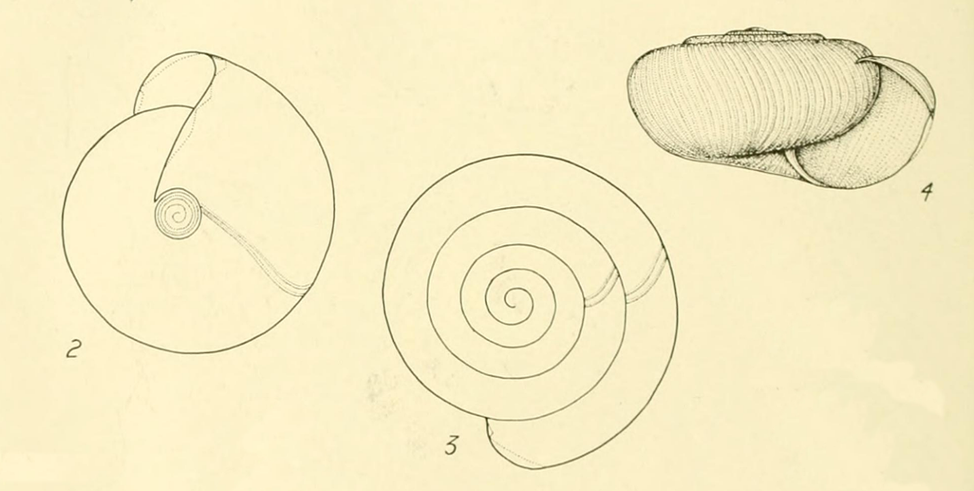
    Radiodomus abietum. After Baker (1930).
    • Radiodiscus (Radiodomus) abietum H.B. Baker 1930a: 124, pl. 6 figs 1–7

    Identification. Shell small, nearly opaque, pale brown (“light chocolate brown”; Baker 1930), subdiscoidal, umbilicate, thin. Spire nearly flat, rather tightly coiled. Whorls as many as 5¾, convex, but markedly flattened above, shouldered. Last whorl shouldered; periphery above middle of whorl. Last whorl slightly deflected downwards. Suture deep. Base well rounded. Protoconch 2–2¼ whorls, with prominent, close, spiral threads (Miquel & Cádiz Lorca 2008: fig. 15). Teleoconch with numerous, low, sharp, strongly curved colabral riblets (“protracted near umbilicus; scarcely arcuate near suture”; interspaces 2–3× broader than riblets) and finer, very closely spaced spiral striae. Periostracum heavy, almost opaque. Aperture narrowly lunate (deeply concave below periphery), edentulous, slightly oblique. Lip thin, simple. Parietal callus weak. Umbilicus small, steep-walled, c. 1/6 of shell width. Width to 6.7 mm (shell wider than high).

    The sides of the foot are slightly pigmented, and the head and tentacles are black according to Baker (1930), who also described various organs, including the genitalia (Baker 1930: pl. 6, figs 5, 7).

    Comparison. This species differs from Discus species in having spiral lirae, teleoconch sculpture of much finer colabral riblets, and a much more narrowly crescent-shaped aperture.

    Habitat. In mixed-wood forests, mostly in moist sites or near streams (Baker 1930; Hendricks 2012). Medium- and high-elevation forests (Frest and Johannes 2001).

    Geographic range. In BC, this species only recently has been found in the southeast (Ovaska et al. 2020). Northern Idaho (Frest and Johannes 2001), Montana west of the Continental Divide (Brunson & Russell 1967).

    Etymology. Radiodomus: from radio (Latin), to radiate + domus, house or home; the gender is feminine. Abietum: of the firs, i.e., the true firs, genus Abies Mill.

    Remarks. This species was originally described as a species of Radiodiscus Pilsbry & Ferris, 1906, subgenus Radiodomus in the family Endodontidae (Baker 1930a). Pilsbry (1948) treated placed itin the family Punctidae, and later it was considered to belong to Charopidae. Recently, based on molecular phylogenetics, Radiodomus was removed from Charopidae and classified as belonging to Discidae (Salvador et al. 2020, 2023).

    References

    • Baker HB (1930) New and problematic West American land-snails. The Nautilus 43: 95–101, pls 5, 6. https://www.biodiversitylibrary.org/page/8515145
    • Brunson RB, Russell RH (1967) Radiodiscus, new to molluscan fauna of Montana. The Nautilus 81: 18–22. https://www.biodiversitylibrary.org/page/8528008
    • Frest TJ, Johannes EJ (2000 [2001]) An annotated checklist of Idaho land and freshwater mollusks. Journal of the Idaho Academy of Science 36: 1–51.
    • Hendricks P (2012) A guide to the land snails and slugs of Montana. A report to the U.S. Forest Service – Region 1. Montana Natural Heritage Program, Helena, Montana, vii + 187 pp., appendices.
    • Miquel SE, Cádiz Lorca FJ (2008) Araucocharopa gallardoi gen. et sp. n. de Charopidae (Mollusca: Gastropoda: Stylommatophora) del sur de Chile. Revista del Museo Argentino de Ciencias Naturales (n.s.) 10: 329–340. https://doi.org/10.22179/revmacn.10.287
    • Ovaska K, Sopuck L, Heron J (“2019” 2020) Surveys for terrestrial gastropods in the Kootenay region of British Columbia, with new records and range extensions. The Canadian Field-Naturalist 133: 221–234. https://doi.org/10.22621/cfn.v133i3.2287
    • Salvador RB, Brook FJ, Shepherd LD, Kennedy M (2020) Molecular phylogenetic analysis of Punctoidea (Gastropoda, Stylommatophora). Zoosystematics and Evolution 96: 397–410. https://doi.org/10.3897/zse.96.53660
    • Salvador RB, Ravalo LGO, de Winter AJ (2023) Phylogenetic position of Canaridiscus and reestablishment of Gonyodiscus (Gastropoda, Discidae). Archiv für Molluskenkunde 152: 159–166. https://doi.org/10.1127/arch.moll/152/159-166
  • Monadenia fidelis (J.E. Gray, 1834)

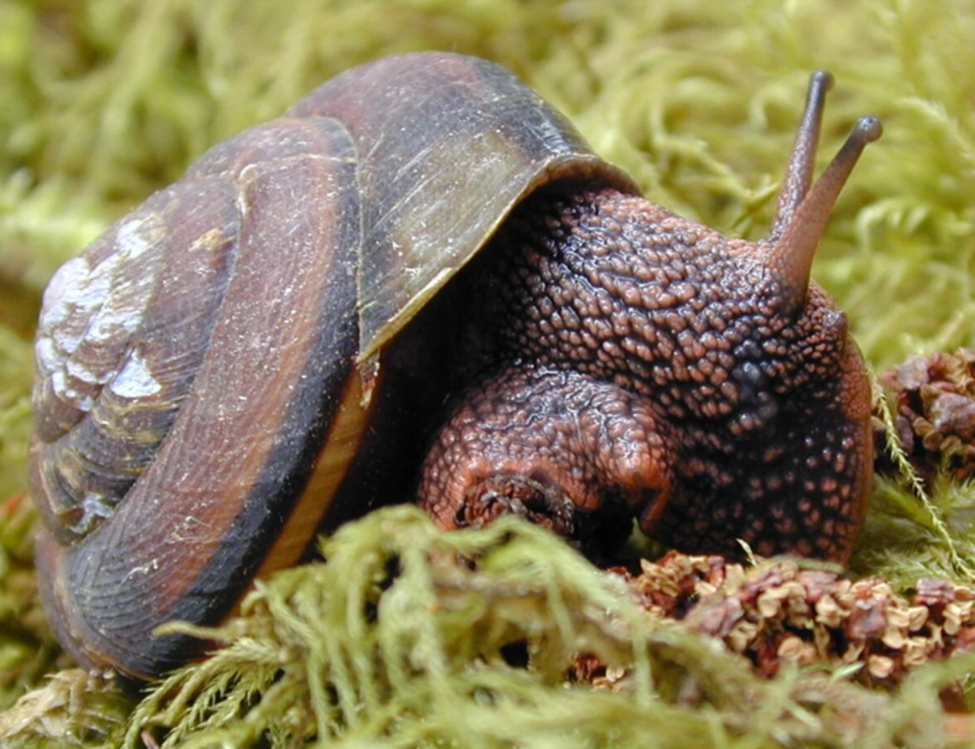
    Monadenia fidelis.
    • Helix fidelis Gray 1834: 67.
    • Helix nuttalliana I. Lea 1839: 88, pl. 23, fig. 74.
    • Helix oregonensis I. Lea 1839: 100, pl. 23, fig. 85.
    • Monadenia semialba Henderson 1929: 80.
    • ? Aglaia fidelis var. minor W.G. Binney 1885: 121, 493, fig. 91.
    • ? Monadenia fidelis celeuthia Berry 1927: 122, fig. 2.
    • ? Monadenia fidelis columbiana Pilsbry 1939: 43, fig. 16g, h.

    Identification. Shell depressed-heliciform. Spire conical, moderately elevated but rather variable, sides more-or-less straight. Whorls c. 5¼–6¾, convex. Periphery rounded in adults. Suture moderately indented. Last whorl descending before adult aperture. Protoconch initially smooth then microscopically, densely granular. Teleoconch with irregularly sized and spaced, round-topped colabral wrinkles (strongest on the apical surface), and shallow, wavy, microscopic striae (most evident on base). Periostracum frequently showing zigzag pattern of “wrinkles”. Aperture subovate-lunate, edentulous, wider than high. Peristome incomplete. Lip a little thickened, slightly recurved; viewed from side, prosocline and slightly arched. Umbilicus c. 1/8 of shell width. Shell opaque, matte above rather glossy below; usually chestnut brown or rusty yellowish brown, with a narrow, pale-yellow band just below periphery, a slightly wider, dark-brown band above, and a dark-brown base (often slightly greenish towards lip); aperture with the exterior pigmentation clearly showing through a milky whitish enamel; lip pale brown or purplish brown; straw-yellow shells, with faint banding infrequent. Shell to 22.1–36.5 mm (usually averaging 32 mm; wider than high).

    Animal rosy-brown, with the spaces between the tubercles greyish; behind the head are some sparse, black reticulations. Mantle with a bold, rust-coloured band; sole of foot pale grey.

    Comparison. There is no other land-snail species like this in BC, recognized by its large size, normally striking colour pattern of bands on the shell, and rosy-brown body. Monadenia fidelis is the largest land snail in BC. Cepaea nemoralis is a banded snail, but much smaller.

    Habitat. Monadenia fidelis lives in forests generally, but also in open, Garry Oak (Quercus garryana Douglas ex Hook.) meadows, along sandy-grassy seashores with logs, and on rocky islets. It mostly lives under logs and rocks and in leaf litter, but is most often encountered when active, in spring, and then sometimes climbing trunks of trees.

    Biology. This species presumably feeds on fungi and plants; animals readily ate a varied diet in captivity, and diet was not correlated to shell colour (Roth 1981). In captivity, individuals of M. fidelis flava reached adult size in 2½–2¾ years and survived up to eight years (Walton 1963, 1970, as M. fidelis beryllica). Monadenia fidelis is a known host of the parasitic ciliate protozoan Tetrahymena limacis (Warren, 1932) (Kozloff 1956).

    Geographic range. In BC, coastal, all around the Georgia Depression, north to the Broughton Archipelago (Dall 1905), and inland to around Pemberton and up the Fraser Valley to near Hope. South to Cape Mendocino, California. Reported from Sitka, Alaska (Dall 1905) and the Yukon (La Rocque 1953), but these seem doubtful. In the context of biogeography, the presence of this species in the Yukon is highly unlikely.

    Etymology. Monadenia: derived from monos (Greek), one + aden (Greek), gland, which is in reference to the single mucus gland (Pilsbry 1939). The gender is feminine. Fidelis (Latin), dependable or faithful.

    Monadenia fidelis, from along the Koksilah River, Vancouver Island, BC.

    Remarks. Subspecies and forms have been described for this variable and relatively widespread, large, and showy species (Pilsbry 1939), which shows the greatest expression of variation in the southern part of its range (Roth 1981). Branson (1983) investigated shell-colour morphs in dozens of geographically separated and environmentally different sites in Washington and Oregon and found an east–west gradient there. He postulated that moisture regime, vegetation cover, and geographical barriers to dispersal were responsible for these differences. North–south variation in M. fidelis was less apparent.

    Monadenia fidelis and related species have had several subspecies named for various shell-colour morphs. Some subspecies continue to be used in the modern literature, while studies of the genetics of other subspecific taxa have shown them to be synonyms of M. fidelis or another species, M. infumata (Gould, 1855) (Roth & Sadeghian 2003). The synonymy here includes the “remainders” which have not been investigated. Probably all Canadian populations belong to the nominotypical subspecies (if these were to be used). Eyerdam (1940) reported M. [fidelis] semialba from Vancouver Island, near Victoria. Monadenia semialba was described from Fidalgo Island, Washington, for a shell polymorphism in which the dark pigment on the base is much reduced and the pale, generally straw yellow subperipheral band is expanded onto the base. Pilsbry (1939) treated this taxon as a subspecies. However, at its type locality, semialba is mixed with normal fidelis (Eyerdam 1937; personal observation) and is treated as colour variant and a synonym.

    Roth (1981) hypothesised that the complex pattern of shell colours in M. fidelis allows this large snail to visually blend into its environment by breaking up the large shell into light and dark patches.

    References

    • Berry SS (1927) A new Oregonian subspecies of Monadenia fidelis. The Nautilus 40: 122–124. https://www.biodiversitylibrary.org/page/8523259
    • Binney WG (1885) A manual of American land shells. United States National Museum, Bulletin 28: 1–528. https://doi.org/10.5479/si.03629236.28.1
    • Branson RM (1983) Geographic variation of banding and color morphs in Monadenia fidelis (Gray, 1934). The Veliger 25: 349–355, 1 pl. https://www.biodiversitylibrary.org/page/42517293
    • Dall WH (1905) Land and fresh water mollusks. Doubleday, Page and Co., New York, New York, USA, 1–171 pp., pls 1, 2. https://doi.org/10.5962/bhl.title.14179
    • Eyerdam WJ (1937) Monadenia semialba Henderson. The Nautilus 51: 63–65. https://www.biodiversitylibrary.org/page/9203283
    • Eyerdam WJ (1940) Extension of range of Monadenia semialba Henderson. The Nautilus 53: 108. https://www.biodiversitylibrary.org/page/8516402
    • Gray JE (1834) [Mr. Gray also exhibited land and fresh-water shells which he regarded as hitherto undescribed]. Proceedings of the Zoological Society of London for 1834 2: 63–68.
    • Henderson J (1929) Some new forms of non-marine Mollusca from Oregon and Washington. The Nautilus 42: 80–82. https://www.biodiversitylibrary.org/page/8518859
    • Kozloff EN (1956) Tetrahymena limacis from the terrestrial pulmonate gastropods Monadenia fidelis and Prophysaon andersoni. The Journal of Protozoology 3: 204–208. https://doi.org/10.1111/j.1550-7408.1956.tb02457.x
    • La Rocque A (1953) Catalogue of the Recent Mollusca of Canada. National Museum of Canada, Bulletin 129: i–x, 1–406.
    • Lea I (1839) Description of new freshwater and land shells. Transactions of the American Philosophical Society (New Series) 6: 1–154.
    • Pilsbry HA (1939) Land Mollusca of North America (north of Mexico). Volume I, Part 1. The Academy of Natural Sciences of Philadelphia, Monographs 3: i–xvii + 1–573 + i–ix.
    • Roth B (1980 [1981]) Shell color and banding variation in two coastal colonies of Monadenia fidelis (Gray) (Gastropoda: Pulmonata). The Wasmann Journal of Biology 38: 39–51. https://www.researchgate.net/publication/260126210
    • Roth B, Sadeghian PS (2003) Checklist of the land snails and slugs of California. Santa Barbara Museum of Natural History Contributions in Science 3: 1–81.
    • Schileyko AA (2004) Treatise on Recent terrestrial pulmonate molluscs. Part 12: Bradybaenidae, Monadeniidae, Xanthonychidae, Eiphragmophoridae, Helminthoglyptidae, Elonidae, Humboldtianidae, Sphincterochilidae, Cochlicellidae. Ruthenica Supplement 2: 1627–1764.
    • Walton ML (1963) Length of life in west American land snails. The Nautilus 76: 127–131. https://www.biodiversitylibrary.org/page/8514575
    • Walton ML (1970) Longevity in Ashmunella, Monadenia and Sonorella. The Nautilus 83: 109–112. https://www.biodiversitylibrary.org/page/8515381
  • Microphysula cookei (Pilsbry, 1922)

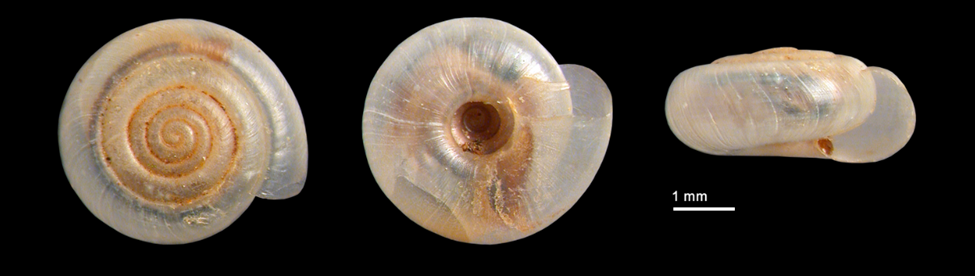
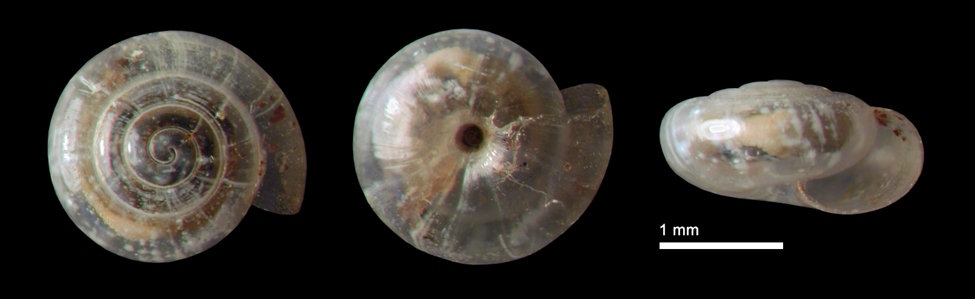
    Microphysula cookei, from Astlais Mountain, Babine Range, BC; W: 4.1 mm.
    • Zonitoides cookei Pilsbry 1922: 38, fig. 1.

    Identification. Shell subdiscoidal. Spire only slightly raised. Whorls c. 5, rather closely coiled and slowly enlarging. Suture moderately indented. Periphery of last whorl rounded. Aperture narrowly lunate, edentulous. Lip thin, simple. Umbilicus small, c. ¼ of shell width. Protoconch smooth. Teleoconch smoothish, under magnification with weak incremental lines and fine, close, spiral lines. Shell with a silky lustre, translucent, milky whitish. Width to 4.4 mm (wider than high).

    Animal pale, whitish, not mottled, slightly pale pinkish at spire (seen through shell).

    Comparison. Microphysula species are rather distinct from other native land-snail species in BC by the tightly coiled, flattened spire and whitish shell. The introduced Vitrea contracta has a transparent or milky whitish shell but it is smaller, lacks spiral microsculpture (and therefore is glassy, not silky in lustre), and has a smaller umbilicus.

    The two species of Microphysula are difficult to distinguish. Pilsbry (1940) suggested that M. cookei is slightly smaller and with less tightly coiled whorls than M. ingersollii. In practice, these species seem not clearly separable on conchological grounds. Identifications of Canadian snails are more apt to be made based on geography: coastal populations have been called M. cookei while those from the Rocky Mountains, M. ingersollii.

    Habitat. In BC, mainly wet, montane coniferous forests, and vegetated rockslides at and below tree line (Forsyth 2002); low-elevation, riparian, mature mixed-wood forest on Vancouver Island. The “pine forest” at Cameron Lake, Vancouver Island, mentioned in the original description by Pilsbry (1922) is possibly erroneous, as the tree species possibly were more likely to have been Douglas-fir (Pseudotsuga menziesii (Mirbel) Franco).

    Geographic range. In BC, in the coastal ranges on the mainland (Boundary, Coast, Skeena, Bulkley, and Cascade ranges), and on Vancouver Island. Microphysula cookei was described and first reported by Pilsbry (1922) and Pilsbry & Cooke (1922); its type locality is Cameron Lake, Vancouver Island. Forsyth (2001) later reported it from the mountains north of Smithers in north-central BC and at Bear Glacier. Anchorage, Alaska, south to the Cascade and Coast mountains in Washington.

    Etymology. Microphysula: derived from micron (Greek), small + physa (Greek), bubble + the Latin diminutive ending –ula. The gender is feminine. This species was named after Dr Charles Montague Cooke Jr (1874–1948), of Honolulu, Hawaii (Wikipedia), who was a friend and malacological collaborator of Henry A. Pilsbry. In July and August 1918, having arrived by steamer, Cooke collected land snails at a couple of places on Vancouver Island, including the type material of this species at Cameron Lake.

    References

  • Columella simplex (A.A. Gould, 1840)

    Columella simplex, from near Jonas Creek, Bulkley Ranges, BC; H: 2.4 mm.
    • Pupa simplex Gould 1840: 403, pl. 3 fig. 21.
    • Columella edentula of authors (non Pupa edentula Draparnaud 1805 = Columella edentula).

    Identification. Shell subcylindrical. Spire elongate, with slightly convex sides tapering to bluntly pointed apex. Whorls c. 5–6, moderately convex; last whorl nearly always larger than penultimate whorl. Sutures rather well indented. Protoconch smooth. Teleoconch with colabral striae. Aperture subovate, wider than high; lacking apertural dentition. Adult lip thin, simple. No umbilicus. Shell subtranslucent, brownish. Shell to 2.8 mm high but usually smaller (higher than wide).

    Comparison. The shell is most like C. columella, but generally shorter, with fewer whorls, and with all whorls of the spire evenly enlarging so that the shell is less cylindrical and the last whorl is never smaller in diameter than the preceding whorl. The aperture of C. columella is also decidedly more elongate and thus higher than wide in adults. Juvenile Vertigo species can be difficult to distinguish from juveniles of C. simplex.

    Habitat. This species lives in forests and is frequently common on the lower surfaces of Sword Fern (Polystichum munitum (Kaulf.) C.Presl) fronds, on other vegetation, and on stick and twigs, but it also lives in leaf litter.

    Geographic range. In BC, C. simplex is common along the coast, but it likely occurs throughout most of BC. However, in the far north of the province and in cordillera areas, it may be replaced with C. columella.

    Etymology. Columna (Latin), a pillar + the Latin diminutive suffix –ella; thus, a little pillar or column. Simplex (Latin), simple or plain, originating likely in the contrast to species of Vertigo, which are dentate than thus, not “simple”.

    Remarks. Pilsbry (1948) used the name C. edentula for the common North American Columella. Other authors have subsequently regarded C. simplex as the correct name for North American populations (e.g. Hubricht 1985; Nekola and Coles 2010). However, no one has ever explicitly presented evidence for this separation, although variation in shell shape, size, and sculpture is known; even Pilsbry (1948) understood that there are differences in the shells of Columella from Europe and North America. There might be an undescribed west coast Columella species, separate from eastern North American (true)C. simplex. Morphological characters (including shell and visceral spotting; see Pokryszko 1990) suggest more than one species within V. simplex in Canada (pers. obs.). However, C. simplex is provisionally used for now.

    References

    • Draparnaud J-P-R ([1805]) Histoire naturelle des Mollusques terrestres et fluviatiles de France, ouvrage posthume. Louis Colas, Paris, 164 pp., 13 pls. pp. https://doi.org/10.5962/bhl.title.12856
    • Gould AA (1840) Monograph of the species of Pupa found in the United States; with figures. Boston Journal of Natural History 3: 395–404.
    • Hubricht L (1985) The distributions of the native land mollusks of the eastern United States. Fieldiana, Zoology (New Series) 24: i–viii, 1–191. https://doi.org/10.5962/bhl.title.3329
    • Nekola JC, Coles BF (2010) Pupillid land snails of eastern North America. American Malacological Bulletin 28: 1–29. https://doi.org/10.4003/006.028.0221
    • Pilsbry HA (1948) Land Mollusca of North America (north of Mexico), vol. II, part 2. The Academy of Natural Sciences of Philadelphia, Monographs 3: i–xlvii + 521–1113.
    • Pokryszko BM (1987) European Columella reconsidered (Gastropoda, Pulmonata, Vertiginidae). Malakologische Abhandlungen Staatliches Museum für Tierkunde Dresden 12: 1–12.
  • Vitrea contracta (Westerlund, 1871)

    Vitrea contracta, from Queen Elizabeth Park, Vancouver, BC; W: 2.2 mm.
    • Zonites (Vitrea) crystallina var. contracta Westerlund 1871: 56.
    • Many older synonyms in the European literature.

    Identification. Shell subdiscoidal. Spire very low, conic. Whorls c. 4–4½, slowly enlarging, tightly coiled. Periphery rounded, above middle; whorls shouldered. Suture moderately indented, bordered by a ‘false suture’. Protoconch smooth. Teleoconch smoothish, with weak incremental lines, stronger on upper surface of whorls near suture. Aperture, narrowly lunate, edentulous. No barriers inside whorls. Lip thin, simple. Umbilicus narrow, deep, c. 1/7 of shell width. Shell transparent or translucent, glassy, colourless or milky white, becoming white and opaque when weathered. Shell width to 2.6 mm.

    Animal pale tan to ivory-white; ocular tentacles translucent, with black eye spots (Roth 1977).

    Comparison. The tightly coiled shell of V. contracta resembles some species of Pristiloma but the shells of these are darker coloured, variously brown.

    Habitat. In BC, V. contracta has been found in urban parks and gardens, and on waste ground, living under ivy and other vegetation, in leaf litter, and under rocks, concrete, boards, and woody debris.

    In Toronto, it has been found in a wooded, urban ravine. Snails generally are found under wood, stones, and debris, in leaf litter, and in ivy and other vegetation. In Britain other, more natural, habitats are occupied, including grasslands, woodlands, around cliffs, in caves, talus slopes and stone walls (Kerney 1999). This species is often associated with dry areas having limestone (Kerney 1999), but in BC it is not especially associated with calcareous soils but rather with synanthropic habitats (Grimm et al. 2010). On a calcareous down in England, fresh shells were found below the surface, suggesting that this snail also occupies voids in soil (Carter 1990).

    Biology. It is omnivorous (Smith 1992).

    Geographic range. Vitrea contracta is introduced to BC, where it is known to occur along the east coast of Vancouver Island north to at least Nanaimo, in the Gulf Islands, in Metro Vancouver and the Fraser Valley east to Abbotsford and near Chilliwack, Kamloops, and on Haida Gwaii (Forsyth 1999, 2004b, unpublished data). This introduced species was first reported from BC by Forsyth (1999).

    Elsewhere in Canada V. contracta has been reported Toronto, Ontario (Grimm et al. 2010). In the USA, this species is known from San Francisco, California (Roth 1977; Roth & Sadeghian 2003) and Lynden, Washington (Roth & Pearce 1984). It also has been introduced to Colombia (Hausdorf 2002) and the state of Victoria, Australia (Smith 1992).

    Vitrea contracta is native to the Western Palaearctic and is widespread in Europe: Iceland and coastal regions of Scandinavia south to the Iberian Peninsula and all around the Mediterranean, including North Africa, Greece (Riedel 1992) and Turkey (Schütt 2005), and east to the Baltic States, Crimea and central Ukraine, and the Caucasus (Sysoev & Schileyko 2009).

    Etymology. Vitrea: vitreus (Latin), glassy; the gender is feminine. Contractus (Latin): narrowed; likely in reference to the aperture.

    Remarks. Some authors divide the genus Vitrea into subgenera and place V. contracta in the subgenus Crystallus R.T. Lowe, 1855 (e.g. Falkner et al. 2002; Roth and Sadeghian 2003; Schileyko 2003). However, no subgenera are used here following Riedel (1992) who reversed his earlier acceptance of subgenera based on the internal structure of the penis (Riedel 1980).

    In some older European literature, V. contracta had not always been distinguished from a similar appearing species, Vitrea crystallina (O.F. Müller, 1774) and treated as a variety of the latter (Kuiper 1964). However, this is not the case, and the two taxa are distinct species. Valovirta & Väisänen (1986) provided additional means to morphologically distinguish these species.

    References

    • Carter S (1990) The distribution of the land snail Vitrea contracta (Westerlund) in a calcareous soil on Martin Down, Hampshire, England. Circaea 7: 91–93.
    • Falkner G, Ripken TEJ, Falkner M (2002) Mollusques continentaux de France. Liste de Référence annotée et Bibliographie. Patrimoines naturels 52: 1–350.
    • Forsyth RG (1999) Distributions of nine new or little-known exotic land snails in British Columbia. The Canadian Field-Naturalist 113: 559–568. https://doi.org/10.5962/p.358656
    • Forsyth RG (2004) Land Snails of British Columbia. Royal BC Museum, Victoria, BC, Canada, iv, 188 pp.
    • Grimm FW, Forsyth RG, Schueler FW, Karstad A (2009 [2010]) Identifying Land Snails and Slugs in Canada: Introduced Species and Native Genera. Canadian Food Inspection Agency, Ottawa, Ontario, Canada, iv + 168 pp.
    • Hausdorf B (2002) Introduced land snails and slugs in Colombia. Journal of Molluscan Studies 68: 127–131. https://doi.org/10.1093/mollus/68.2.127
    • Kerney M (1999) Atlas of the land and freshwater molluscs of Britain and Ireland. Harley Books, Colchester, United Kingdom, 264 pp.
    • Kuiper JGJ (1964) On Vitrea contracta (Westerlund). Journal of Conchology 25: 276–278. https://doi.org/10.5962/p.407435
    • Riedel A (1980) Genera Zonitidarum. Diagnosen supraspezifischer Taxa der Familie Zonitidae (Gastropoda, Stylommatophora). Dr. W. Backhuys, Rotterdam, The Netherlands, 197 pp.
    • Riedel A (1992) The Zonitidae (sensu lato) (Gastropoda, Pulmonata) of Greece. Hellenic Zoological Society, Athens viii + 194 pp.
    • Roth B (1977) Vitrea contracta (Westerlund) (Mollusca: Pulmonata) in the San Francisco Bay area. The Veliger 19: 429–430. https://www.biodiversitylibrary.org/page/42409646
    • Roth B, Pearce TA (1984) Vitrea contracta (Westerlund) and other introduced land mollusks in Lynnwood, Washington. The Veliger 27: 90–92. https://www.biodiversitylibrary.org/page/42481134
    • Roth B, Sadeghian PS (2003) Checklist of the land snails and slugs of California. Santa Barbara Museum of Natural History Contributions in Science 3: 1–81.
    • Schileyko AA (2003) Treatise on Recent terrestrial pulmonate molluscs. Part 10: Ariophantidae, Ostracolethidae, Ryssotidae, Milacidae, Dyakiidae, Staffordiidae, Gastrodontidae, Zonitidae, Daudebardiidae, Parmacellidae. Ruthenica Supplement 2: [2] + 1309–1466.
    • Schütt H (2005) Turkish Land Snails, 4th ed. Verlag Natur & Wissenschaft, Solingen, Germany, 559 pp.
    • Smith BJ (1992) Non-marine Mollusca. In: Houston WWK (Ed.) Zoological Catalogue of Australia. Volume 8. AGPS, Canberra, xii + 405 pp.
    • Sysoev A, Schileyko A (2009) Land snails and slugs of Russia and adjacent countries. Pensoft, Sofia, Bulgaria, 212 pp. + 142 pls.
    • Valovirta I, Väisänen RA (1986) Multivariate morphological discrimination between Vitrea contracta (Westerlund) and V. crystallina (Müller) (Gastropoda, Zonitidae). Journal of Molluscan Studies 52: 62–67. https://doi.org/10.1093/mollus/52.1.62
    • Westerlund CA (1871) Fauna molluscorum terrestrium et fluviatilium Sveciæ, Norvegiæ et Daniæ. Sveriges, Norges och Danmarks land- och sötvatten-mollusker. Adolf Bonnier, Stockholm, 256 pp. https://doi.org/10.5962/bhl.title.13242
  • Striatura pugetensis (Dall, 1895)

    Striatura pugetensis, from Vancouver, BC; W: 1.8 mm.
    • Patulastra? (Punctum?) pugetensis Dall 1895: 130.
    • Radiodiscus hubrichti B.A. Branson 1975: 47, fig. 1a–c.

    Identification. Shell subdiscoid, with very low, domed spire. Suture deep. Whorls c. 3½, last slightly descending in adults. Periphery rounded, medial. Width of last whorl c. 2× penultimate whorl. Aperture subrotund, edentulous. Lip thin, simple. Protoconch with close, strong spiral threads. Teleoconch with colabral thin-edged riblets, with spiral threads between, including on base. Umbilicus c. ¼ of shell width. Width to 1.8 mm (wider than high). Shell thin, pale yellowish grey, corneous.

    Animal translucent white, with head and tentacles grey and a small black spot over the lung.

    Comparison. There is no other snail quite like this species in BC. The pale colour of the shell and intricate microsculpture (not well shown in the photograph) are distinctive among BC microsnails.

    Habitat. This species inhabits moist forests where it lives in leaf litter and under woody debris.

    Geographic range. In BC, S. pugetensis occurs along the whole coast where it is common. It also is in the southern interior, including the Kootenays, where it is known from a few, scattered records (Ovaska et al. 2020) and the valley of the North Thompson River (Forsyth 2001).

    Striatura pugetensis occurs from south-eastern Alaska south to Isla Guadalupe, Baja California, Mexico (Pilsbry 1927; Smith et al. 1990) and east to Glacier National Park, northwestern Montana (Berry 1919). This species was said to also occur in the Hawaiian Islands, on Kauai (Baker 1941), but see Remarks.

    Etymology. Striatura: derived from the Latin striatus, furrowed + the –ura suffix to form a noun from an adjective; the gender is feminine. Pugetensis (Latin), of Puget Sound, or the more general region.

    Remarks. This species was first described as new by Dall (1895) from material collected at Seattle, Washington by the amateur conchologist P.B. Randolph (see Punctum randolphii). Berry (1919) first recognized this species as a Striatura, and Baker (1928) later placed the species in the subgenus Pseudohyalina. While specimens from northwest Montana were said by Berry (1919: 492) to be “larger and flatter and coarser in appearance, slightly approaching in some respects the giant southern meridionalis Pilsbry and Ferriss [1906]”, Pilsbry (1946) considered these to be typical of S. pugetensis.

    By misplacing the heading for the subgenus Striatura s.s., Pilsbry (1946) wrongly indicated that this species belongs in that subgenus, but he corrected this in the following part of his monograph (Pilsbry 1948: 1102).

    Specimens from Kauai were identified by Baker (1941) as S. pugetensis, but his figured specimen (pl. 60, figs 1–3) shows a shell with a higher spire and slightly different form than shells from BC (and presumably Puget Sound) material, and one suspects that it is not the same species; the Hawaiian archipelago also has several endemic Striatura species (Baker 1941), so it seems likely that Hawaiian “S. pugetensis”is yet another endemic species, not S. pugetensis.

    Radiodiscus hubrichti B.A. Branson, 1975, which was described from the Olympic Peninsula (Branson 1975), was recognized by Solem (1977a, b) as a synonym of S. pugetensis.

    If following the classification of Schileyko (2003), who diverged from other authors in treating Pseudohyalina as a full genus, this species would be Pseudohyalina pugetensis (Dall, 1895).

    References

    Baker HB (1928) Mexican mollusks collected for Dr. Bryant Walker in 1926, I. Occasional Papers of the Museum of Zoology, University of Michigan 193: 64 pp., pl. 6.

    Baker HB (1941) Zonitid snails from Pacific Islands, parts 3 and 4. 3. Genera other than Microcystinae. 4. Distribution and indexes. Bernice P Bishop Museum, Bulletin 166: 203–370, pls 43–65. https://babel.hathitrust.org/cgi/pt?id=mdp.39015069709080

    Berry SS (1919) Mollusca of Glacier National Park, Montana. Proceedings of The Academy of Natural Sciences of Philadelphia 1919: 195–205, pls 9, 10. https://www.jstor.org/stable/4063842

    Branson BA (1975) Radiodiscus hubrichti (Pulmonata: Endodontidae) new species from the Olympic Peninsula, Washington. The Nautilus 89: 47–48. https://www.biodiversitylibrary.org/page/16319395

    Dall WH (1895) New species of land shells from Puget Sound. The Nautilus 8: 129–130. https://www.biodiversitylibrary.org/page/27055682

    Forsyth RG (2001) A note on the distribution of Striatura pugetensis in British Columbia. The Festivus 33: 57–58. https://www.biodiversitylibrary.org/page/50507922

    Ovaska K, Sopuck L, Heron J (2019 [2020]) Surveys for terrestrial gastropods in the Kootenay region of British Columbia, with new records and range extensions. The Canadian Field-Naturalist 133: 221–234. https://doi.org/10.22621/cfn.v133i3.2287

    Pilsbry HA (1927) Expedition to Guadalupe Island, Mexico, in 1922. Land and freshwater mollusks. Proceedings of the California Academy of Sciences (4th Series) 16: 159–203, pls 6–12. https://www.biodiversitylibrary.org/page/3174272

    Pilsbry HA (1946) Land Mollusca of North America (north of Mexico), vol. II, part 1. The Academy of Natural Sciences of Philadelphia, Monographs 3: frontispiece + i–vi + 1–520.

    Pilsbry HA (1948) Land Mollusca of North America (north of Mexico), vol. II, part 2. The Academy of Natural Sciences of Philadelphia, Monographs 3: i–xlvii + 521–1113.

    Smith AG, Miller WB, Christensen CC, Roth B (1990) Land Mollusca of Baja California, Mexico. Proceedings of the California Academy of Sciences (4th Series) 47: 95–158. https://www.biodiversitylibrary.org/page/15776117

    Solem A (1977a) Radiodiscus hubrichti Branson, 1975, a synonym of Striatura pugetensis (Dall, 1895) (Pulmonata: Zonitidae). The Nautilus 91: 146–148. https://www.biodiversitylibrary.org/page/8273672

    Solem A (1977b) Shell microsculpture in Striatura, Punctum, Radiodiscus, and Planogyra (Pulmonata). The Nautilus 91: 149–155. https://www.biodiversitylibrary.org/page/8273675

  • Haplotrema vancouverense (I. Lea, 1838)

    Haplotrema vancouverense, from Mayne Island, BC; W: 23.8 mm.
    • Helix vancouverensis I. Lea 1838: 87, pl. 23 fig. 72. [Not “1839”.]
    • Circinaria vancouverensis var. chocolata Dall 1905: 34.
    • ? Helix vellicata Forbes 1850: 55, pl. 9 fig. 1a–c.

    Identification. Shell subdiscoidal. Spire very low, scarcely conical. Whorls c. 5. Last whorl much rapidly enlarging (width from above c. 3× width of penultimate whorl). Suture rather shallow. Protoconch smooth. Teleoconch with low, irregular incremental lines, coarsest near suture, and microscopic spiral striae. Aperture subovate, edentulous. Adult lip slightly thickened; arched forward, straightened or somewhat downward drooping. Umbilicus c. ¼ of shell width. Shell matte or somewhat glossy; ochre to olive brown, often with darker streaks; inside aperture whitish.

    The animal is pearly whitish with a slightly darker head, mauve-grey or blue-grey ocular tentacles, and a tan to brown mantle with large, dark blotches.

    Comparison. This is the largest haplotrematid in BC, although some A. hybridum may be equally large. However, their shell sculpture differs. In H. vancouverense the prominent beading (most clearly seen around the umbilicus) of the two Ancotrema species is lacking.

    Habitat. This species lives in forests, under rotten logs and around the bases of sword ferns, often deep within leaf litter and loose soil.

    Biology. Like other haplotrematids, H. vancouverense is predatory on snails and other invertebrates. For example, Grass (1966) observed this species preying on Vespericola columbianus and millipedes.

    Geographic range. British Columbia: along the entire coast, but it is also known (and perhaps rare) from the southern Interior mountains south-east of Trail and south of Salmo (Ovaska et al. 2020).

    Aleutian Islands and southeast Alaska (Pilsbry 1946) to Del Norte, Humboldt, and Trinity counties, north-western California (Roth & Sadeghian 2003); east through northern Idaho to north-western Montana (Pilsbry 1946; Brunson & Osher 1957). Although Hanna (1925) believed this species native to Unalaska Island in the Aleutian chain, Eyerdam (1933) thought that that this species was introduced, having observed that he found them always near villages or abandoned settlements and not on other islands of the Aleutian chain.

    Etymology. Haplotrema: derived from Greek, haplos, simple + trema, aperture or hole; the gender is neuter. Vancouverense: named for Fort Vancouver (now Vancouver, Washington, USA), where the species was originally found by English botanist and zoologist Thomas Nuttall on the second Nathaniel Wyeth expedition to the Pacific Ocean. The expedition reached Fort Vancouver in late 1834.

    Haplotrema vancouverense, from Goldstream Provincial Park, BC.

    Remarks. The publication date of this species is usually given to be 1839 (e.g. Pilsbry 1946), but although read before the society on 21 July 1837, volume 6, part 1 of the Transactions of the American Philosophical Society was published 15 June 1838 (Tryon 1861; Scudder 1885).

    Literature and collection records of this species have been found (rather frequently) to be Ancotrema hybridum, but these species are readily distinguished from each other by inspection of the shell microsculpture (Forsyth 2004b).

    Helix vellicata Forbes, 1850 has been synonymised with H. vancouverense for many years (since at least Binney and Bland 1869; Pilsbry 1946), but this may be incorrect. Helix vellicata could be a synonym of another species, possibly A. hybridum. Forbes (1850: 55) gave the width of the shell as 22 mm, which is within the range from both H. vancouverense and A. hybridum. However, in Latin he wrote “… sulcato-striatâ, striis minutissimis spiralibus decussatâ …” [furrow-striae, striae minutely spirally decussate]. This suggests that this might be A. hybridum or another haplotrematid having decussate (or beaded) sculpture rather than H. vancouverense, which is much smoother and with sculpture that cannot be considered decussate.

    An alternative classification (Schileyko 2000) treats the subgenus Ancomena H.B. Baker, 1931 as a genus: thus, Ancomena vancouverense.

    References

    • Binney WG, Bland T (1869) Land and Fresh Water Shells of North America. Part I. Pulmonata Geophila. Smithsonian Miscellaneous Collections 194: xii + 316 pp.
    • Brunson RB, Osher U (1957) Haplotrema from western Montana. The Nautilus 70: 121–123. https://www.biodiversitylibrary.org/page/8520790
    • Dall WH (1905) Land and fresh water mollusks. Doubleday, Page and Co., New York, New York, USA, 1–171.
    • Eyerdam WJ (1933) A biological collecting excursion to the Aleutian Islands. The Nautilus 46: 124–128. https://www.biodiversitylibrary.org/page/8519483
    • Forbes E (1850) On the species of Mollusca collected during the surveying Voyages of the Herald and Pandora, by Capt. Kellett, R.N.,C.B., and Lieut. Wood, R.N. Proceedings of the Zoological Society of London 1850 18: 53–56, pl. 9. https://www.biodiversitylibrary.org/page/59278541
    • Grass A (1966) Some land and freshwater Mollusca from British Columbia, Canada. Part II. Hawaiian Shell News (n.s.) 14 (6): 6–7.
    • Hanna GD (1925) Some land shells from the Aleutian Islands, Alaska. The Nautilus 38: 122–127. https://www.biodiversitylibrary.org/page/8525103
    • Lea I (1838) Description of new freshwater and land shells. Transactions of the American Philosophical Society (new series) 6: 1–154, pls 1–24. https://doi.org/10.2307/1005319
    • Ovaska K, Sopuck L, Heron J (2019 [2020]) Surveys for terrestrial gastropods in the Kootenay region of British Columbia, with new records and range extensions. The Canadian Field-Naturalist 133: 221–234. https://doi.org/10.22621/cfn.v133i3.2287
    • Pilsbry HA (1946) Land Mollusca of North America (north of Mexico), 2(1). The Academy of Natural Sciences of Philadelphia, Monographs 3: frontis., i–vi, 1–520.
    • Roth B, Sadeghian PS (2003) Checklist of the land snails and slugs of California. Santa Barbara Museum of Natural History Contributions in Science 3: 1–81.
    • Scudder NP (1885) The published writings of Isaac Lea, LL.D. Bulletin of the United States National Museum 23: i–lix, 1–278. https://doi.org/10.5479/si.03629236.23.1
    • Tryon GW, Jr. (1861) List of American writers on Recent conchology with the titles of their memoirs and dates of publication. Baillière Brothers, New York, New York, USA, 68 pp. https://archive.org/details/listofamericanwr00tryo
  • Paralaoma borealis (Pilsbry & Y. Hirase, 1905)

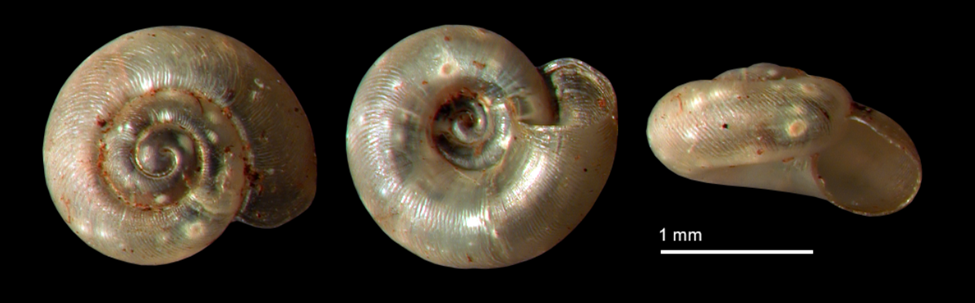
    Paralaoma borealis, Riverside Park, Smithers, British Columbia; width 2.2 mm.
    • Punctum boreale Pilsbry & Hirase 1905: 717.
    • Paralaoma servilis of authors, non Helix servilis Shuttleworth 1852: 140.
    • Paralaoma conspectum of authors, non Helix conspectum Bland 1865: 163, fig. 7.
    • Paralaoma caputspinulae of authors, non Helix caputspinulae Reeve 1852 (1851–1854): pl. 133, sp. 818.

    Identification. Shell depressed-heliciform. Spire moderately elevated, conical. Sutures deep. Whorls c. 4, shouldered; periphery above middle of last whorl. Protoconch 1½ whorls, with weak spiral striae on latter part. Teleoconch with narrow, widely spaced colabral riblets, weaker on base, with usually 5, 6, or more fine colabral threads between riblets; colabral threads beaded by spiral striae. Aperture rounded-lunate, wider than high, edentulous. Last whorl slightly descending above. Lip thin, simple but columellar lip expanded. Umbilicus c. 1/5 shell width. Shell yellowish or brownish olive. Shell width to 2.4 mm (wider than high).

    Comparison. Paralaoma borealis is larger than Punctum species, and the colabral riblets have a greater number of intercalary threads. The shell of Planogyra clappi superficially similar, in having fine, thin colabral riblets, but the riblets are much more delicate and higher. Paralaoma servilis, which is very similar to P. borealis, is known from Washington and California, where it is introduced (Nekola et al. 2025).

    Habitat. Often disturbed habitats such as roadsides and in parks and gardens, but other sites are remote and undisturbed. In leaf litter, under dead wood, and under rocks. Most often seen alive in cool weather.

    Geographic range. This species is sporadic throughout BC. Hokkaido, northern Japan to Alaska, south to Idaho and southern California (Nekola et al. 2025), but there are many more records of Paralaoma spp. available from the western USA for which identifications need confirmation.

    Etymology. Paralaoma: derived from the Greek prefix para-, beside or near to + Laoma J.E. Gray, 1850, a genus of punctoid land snails; the gender is feminine. Borealis (Latin), of the north.

    Remarks. The taxonomy of this species has been confused for many years and has gone under several different names, including Punctum conspectum, now a junior synonym of Paralaoma servilis; Paralaoma caputspinulae, a species native to New Zealand and Lord Howe Island, Australia; and Paralaoma servilis, a widely introduced species known from the USA (including Washington and California), Australia, Europe, and several Atlantic islands (Nekola et al. 2025).

    References

    • Bland T (1865) Notes on certain terrestrial Mollusca, with descriptions of new species. Annals of the Lyceum of Natural History of New York 8: 155–170. https://doi.org/10.1111/j.1749-6632.1867.tb00306.x
    • Nekola JC, Brook FJ, Foon JK, Horsáková V, Ishii Y, Köhler F, Líznarová E, Nováková M, Saito T, Salvador RB, Horsák M (2025) Will the real invasive snail please stand up? A phylogenetic reconsideration of Paralaoma servilis (Shuttleworth, 1852) (Gastropoda: Stylommatophora: Punctidae). Zoological Journal of the Linnean Society 203: zlae142. https://doi.org/10.1093/zoolinnean/zlae142
    • Pilsbry HA, Hirase Y (1905) New land mollusks of the Japanese Empire. Proceedings of the Academy of Natural Sciences of Philadelphia 57: 705–719.
    • Reeve LA (1851–1854) Monograph of the genus Helix. Lovell Reeve, London, United Kingdom. https://doi.org/10.5962/bhl.title.8129
    • Shuttleworth RJ (1852) Diagnosen einiger neuen [sic] Mollusken aus den Canarischen Inseln. Mittheilungen der Naturforschenden Gesellschaft in Bern 1852: 137–146.